Country Count
USA . Mexico . Brazil . Canada . Holland . France . Germany . Switzerland . Italy . Vatican City . Austria . Czech Republic . Spain . Sweden . Portugal . Belgium . Norway . Russia . Denmark . England . Kenya . Tanzania . Mali . Bosnia . Israel . Jordan . Slovenia . Thailand . Ireland . Greece . Monaco . Romania . Serbia . Poland . Turkey . Scotland . Luxembourg . Nepal . Morocco . Swaziland . South Africa . Croatia . Estonia . Hungary . Philippines . Indonesia . Japan . South Korea . Hong Kong . Macau . Myanmar . Cambodia . Vietnam
Showing posts with label Nepal. Show all posts
Sunday, February 24, 2013
Thursday, February 21, 2013
Sunday, February 17, 2013
one man's trash...
The tiny village of Newakot was as scenic and idyllic a spot we could find on our short journey through Nepal. It's also one we almost didn't have the opportunity to visit because of road barricades in the township preceding it. Two pedestrians had died the day before due to wreck-less driving through the towns streets. Understandably, the affected families and friends weren't going to allow that to happen again - nor were they going to allow anyone to pass. But, after fifteen minutes of negotiations, we were granted permission to continue on our way.
Once we arrived, we didn't want to leave. We begged and pleaded to stay a day longer than the one given. Instead we were allotted a few extra hours. The fresh air, blue skies and crystal clear waters provided all the greater contrast for us as we entered Kathmandu the following day.
The air in Kathmandu is so thick you can eat it. Some might call that a cliche'. I just call it the truth. Many walk around with face masks on. Every exposed part of the body is covered with a thin film of smog. No matter how long you shower, you never truly feel clean.
The rivers no longer qualify as such. In their place are small pools of mucky water gathered between mounds of debris.
There are no sanitation laws in the country. No waste management company. Small piles of trash are instead dumped onto the streets and burned at random. Though, come morning, the streets are swept clean.
As we walked to a local market two men were shoveling a muddy mass of gunk out of a street-side gutter... in the process, flinging some of it on me. Not knowing what diseases might have just landed on my arm I grabbed a hand wipe and cleaned it off. I searched for a location to dispose of the wipe, but found nothing.
After purchasing an item from a teenaged boy, I asked him if he had a trashcan. He looked at me quizzically. Garbage, I tried. Again I was only returned a look that questioned my sanity. Rubbish, I offered, and showed the wipe. With an expression that now had me feeling like an idiot, he shrugged his shoulder and pointed to the street. Of course.
I held on to the wipe for a while longer.
After returning home I came across an excerpt in Dervla Murphy's book, The Waiting Land - A Spell in Nepal, which I thought couldn't have summed up the city better.
Once we arrived, we didn't want to leave. We begged and pleaded to stay a day longer than the one given. Instead we were allotted a few extra hours. The fresh air, blue skies and crystal clear waters provided all the greater contrast for us as we entered Kathmandu the following day.
The air in Kathmandu is so thick you can eat it. Some might call that a cliche'. I just call it the truth. Many walk around with face masks on. Every exposed part of the body is covered with a thin film of smog. No matter how long you shower, you never truly feel clean.
The rivers no longer qualify as such. In their place are small pools of mucky water gathered between mounds of debris.
There are no sanitation laws in the country. No waste management company. Small piles of trash are instead dumped onto the streets and burned at random. Though, come morning, the streets are swept clean.
As we walked to a local market two men were shoveling a muddy mass of gunk out of a street-side gutter... in the process, flinging some of it on me. Not knowing what diseases might have just landed on my arm I grabbed a hand wipe and cleaned it off. I searched for a location to dispose of the wipe, but found nothing.
After purchasing an item from a teenaged boy, I asked him if he had a trashcan. He looked at me quizzically. Garbage, I tried. Again I was only returned a look that questioned my sanity. Rubbish, I offered, and showed the wipe. With an expression that now had me feeling like an idiot, he shrugged his shoulder and pointed to the street. Of course.
I held on to the wipe for a while longer.
After returning home I came across an excerpt in Dervla Murphy's book, The Waiting Land - A Spell in Nepal, which I thought couldn't have summed up the city better.
"Another aspect of Kathmandu's crudity is referred to [by] Dr David Wright, who spent some years here as a surgeon to the British Residency and wrote, in 1877, 'From a sanitary point of view Kathmandu may be said to be built on a dunghill in the middle of latrines.' ... I feel that he was being charitable when he stated that 'this is one of the filthiest cities in the world.' In some quarters reeking water lies stagnant in the square stone public baths, and I doubted the evidence of my eyes when I first saw people drinking this brew. After the scum has been pushed aside and the liquid - one can hardly describe it as water - has been collected in earthenware or brass pitchers it looks like strong tea; what immunity (or what dysentery) these people must have!"
Wednesday, February 13, 2013
Wednesday, February 6, 2013
Tis better to give...
My mom has a soft heart. She can't pass those in need without giving something. For days after a child had come up to her asking for a notebook for school, she fretted over the fact she hadn't yet changed her money into Nepalese Rupee in order to purchase one for him. Seeing children who create make-shift hacky sacks with bundled up vines, with dirty little faces and clothes bearing holes gave added initiative to have something on hand to offer at a moments notice. Our guide advised her against it. 'Once you hand something to one, the whole village will surround you,' he warned.
She didn't care.
After a 10k mountain trek we reached a tiny, secluded, village. Greeting us were a handful of young children, playing with wooden sticks. Immediately my mom rummaged through her purse and pulled out a pack of gum. Within milliseconds of handing one child a piece, she was surrounded on all sides by 20 little hands reaching for one.
"No! Down! Stay!" she commanded, as if they understood.
"They're not dogs, mom," I reminded her.
One by one each child would back off, happily grinning with a mouth full of gum.
Later that afternoon, back in Bandipur, she bought two packages of pencils after receiving that request by a few children. We took a stroll outside of the village to an area we hadn't been yet. Brightly colored houses dotted unpaved roads that curved around lush rolling hills.
A young boy appeared in front of us. My mom got his attention and handed him a pencil. His eyes lit up.
"Kalaaaaaaaaaaaaaaaaaaaaaaam!" he screamed while running through the streets. "KALAM! PENCIL! I HAVE A PENCIL!"
He waved the pencil in the air as he ran. Children ran out of houses and up the streets to meet him.
"KALAM!" he happily exclaimed, while showing it to the group. Their eyes widened to match his. He then pointed to my mom.
In unison their heads shifted from him to my mom. She was surrounded in an instant. Each were given their own pencil, but some asked for another.
"No," my mom said, "you already have one."
We continued on our way, with most children returning from where they came. All but two that is. A young boy and girl tagged behind us at a distance.
"Kaaaaalam, Kaaaaalam, Kaaaaalam," they chanted.
"You already have one," my mom would occasionally call back.
The road continued forward for as far as our eyes could see. The only way back to the village was to turn around. There was no other way. Our hesitancy grew each step we took, for fear of running into a mob. A child ambush seemed a more frightening fate than being lost in the wilds of Nepal.
"Kaaaaalam, Kaaaalam, Kaaaaalam," the two young children continued to chant.
A group of teenaged boys appeared on the street in front of us.
"Kalam!" the little boy shouted. "Kalam!" the little girl echoed. They rushed to my mom as they saw her pull out the box of pencils for the teenagers, who had just surrounded her.
"Wait, wait," she yelled, holding the box high above her. "Who speaks English?"
One boy raised his hand.
"Tell them they already have a pencil. No more," she requested.
He did, and pushed them away for added effect.
She didn't care.
After a 10k mountain trek we reached a tiny, secluded, village. Greeting us were a handful of young children, playing with wooden sticks. Immediately my mom rummaged through her purse and pulled out a pack of gum. Within milliseconds of handing one child a piece, she was surrounded on all sides by 20 little hands reaching for one.
"No! Down! Stay!" she commanded, as if they understood.
"They're not dogs, mom," I reminded her.
One by one each child would back off, happily grinning with a mouth full of gum.
Later that afternoon, back in Bandipur, she bought two packages of pencils after receiving that request by a few children. We took a stroll outside of the village to an area we hadn't been yet. Brightly colored houses dotted unpaved roads that curved around lush rolling hills.
A young boy appeared in front of us. My mom got his attention and handed him a pencil. His eyes lit up.
"Kalaaaaaaaaaaaaaaaaaaaaaaam!" he screamed while running through the streets. "KALAM! PENCIL! I HAVE A PENCIL!"
He waved the pencil in the air as he ran. Children ran out of houses and up the streets to meet him.
"KALAM!" he happily exclaimed, while showing it to the group. Their eyes widened to match his. He then pointed to my mom.
In unison their heads shifted from him to my mom. She was surrounded in an instant. Each were given their own pencil, but some asked for another.
"No," my mom said, "you already have one."
We continued on our way, with most children returning from where they came. All but two that is. A young boy and girl tagged behind us at a distance.
"Kaaaaalam, Kaaaaalam, Kaaaaalam," they chanted.
"You already have one," my mom would occasionally call back.
The road continued forward for as far as our eyes could see. The only way back to the village was to turn around. There was no other way. Our hesitancy grew each step we took, for fear of running into a mob. A child ambush seemed a more frightening fate than being lost in the wilds of Nepal.
"Kaaaaalam, Kaaaalam, Kaaaaalam," the two young children continued to chant.
A group of teenaged boys appeared on the street in front of us.
"Kalam!" the little boy shouted. "Kalam!" the little girl echoed. They rushed to my mom as they saw her pull out the box of pencils for the teenagers, who had just surrounded her.
"Wait, wait," she yelled, holding the box high above her. "Who speaks English?"
One boy raised his hand.
"Tell them they already have a pencil. No more," she requested.
He did, and pushed them away for added effect.
Monday, February 4, 2013
Himalayan sundowners
Our Christmas Eve arrival into Bandipur was one filled with excitement amongst the locals. Not due to the date, because most are either Buddhist or Hindu. And not due to our presence - although that should have been reason enough. Right??
On the day of our arrival the town square of Bandipur was transformed into a Kollywood set. Kollywood being the Nepalese version of Bollywood.
Women in brightly colored saris gracefully swayed back and forth while the main characters, a romantic couple, danced in their midst. The locals were mesmerized. We would have been too, had the scenery not won out in stealing away our attention.
Mountains surrounded us on all sides, but we wanted to be closer.
After hiking up the nearest hill and deciding to stay to watch the sun set, I positioned myself far away from the others, wanting to spend that time alone. Staring out at the mountains, listening to the sound of the wind, I couldn't have been more at peace. I reflected on different aspects in my life and wanted the moment to last forever.
Wrapped up in my own thoughts, though, I hadn't heard the group of Chinese photographers arrive on the hilltop until they beckoned me to become their impromptu model, because of where I was situated.
It took a moment to realize what they wanted of me, since they didn't speak English and my Mandarin is right on par with my other Chinese dialects: non-existent.
It worked though. With wild hand gestures, grunts and, on occasion, manually moving me into the correct position, they seemed pleased with the results. At least it appeared that way as they laughed wildly in, what I'd like to assume was, satisfaction while pointing at their display screen.
After all, who needs serenity anyway?
On the day of our arrival the town square of Bandipur was transformed into a Kollywood set. Kollywood being the Nepalese version of Bollywood.
Women in brightly colored saris gracefully swayed back and forth while the main characters, a romantic couple, danced in their midst. The locals were mesmerized. We would have been too, had the scenery not won out in stealing away our attention.
Mountains surrounded us on all sides, but we wanted to be closer.
After hiking up the nearest hill and deciding to stay to watch the sun set, I positioned myself far away from the others, wanting to spend that time alone. Staring out at the mountains, listening to the sound of the wind, I couldn't have been more at peace. I reflected on different aspects in my life and wanted the moment to last forever.
Wrapped up in my own thoughts, though, I hadn't heard the group of Chinese photographers arrive on the hilltop until they beckoned me to become their impromptu model, because of where I was situated.
It took a moment to realize what they wanted of me, since they didn't speak English and my Mandarin is right on par with my other Chinese dialects: non-existent.
It worked though. With wild hand gestures, grunts and, on occasion, manually moving me into the correct position, they seemed pleased with the results. At least it appeared that way as they laughed wildly in, what I'd like to assume was, satisfaction while pointing at their display screen.
After all, who needs serenity anyway?
Wednesday, January 30, 2013
it's not the destination that counts...
We journeyed by bus to Bandipur, a five hour ride from Bhaktapur. Our departure was set for 6am, Nepali time. Meaning, we sat in a cold empty bus and watched other passengers slowly file in, as darkness turned to light. My toes went numb from the chill by the time the bus engine was finally turned on.
Our first rest stop came a few hours in. It was a needed bathroom break for most on the bus, along with the subsequent buses in the makeshift lot. My mom and I lined up with the rest of the women in front of a tent that was placed at the edge of a ravine, leading to a river below. Each time a woman went in, she would come out with the exact scrunched up face of disgust as the woman prior.
"Oh my gosh, that was awful!" my mother told me as she walked out of the tent opening.
I handed her a baby wipe for her hands. "Well, a hole in the ground is a hole in the ground."
"It's not even that!" she spat.
I pushed the plastic door aside and walked in. The tent was long and narrow. A shallow ditch, like a gutter, lined the back wall. That was where bodily excrements were to be relieved. Instead feces dotted the muddy ground. I praised myself for having rolled up my jeans beforehand, and then walked to the furthest corner.
The entire way the roads were packed. Mostly with bright, multi-colored trucks, with words like "See You" or "God Loves You" written across them and a portrait or landscape design painted on the back.
The ride was too bumpy and the landscape too beautiful to read a book. So most of the travel was spent staring out the window. One set of windows provided front-seat, cliff-side views, since the roads are built on the mountain instead of the valley below. The opposite windows, beyond the roadside stands on the remaining bit of flat earth, gave way to views of rushing clear blue waters towered over by lush mountains -considered mere molehills in the land of the Himalayas. Suspension bridges stretched across the valley, providing roadside stand workers easy access to their villages located on the opposite hill.
Bandipur is a small village high on a hilltop. It was also a location the bus did not go. Instead, the last forty minutes of our journey was by utility vehicle. We were first motioned over to a small flatbed truck. In the back were two metal benches, one of which was broken. The driver, upon seeing five of us, called another man over. The man ran to the truck with a welding torch and began fixing the broken bench. But that was soon abandoned when another SUV was found. The inside was nearly gutted and the flooring had holes, (every car could use extra ventilation or quick trash removal), but the seats were intact and it made the journey up the switchbacks, into Bandipur, without a hitch.
Our first rest stop came a few hours in. It was a needed bathroom break for most on the bus, along with the subsequent buses in the makeshift lot. My mom and I lined up with the rest of the women in front of a tent that was placed at the edge of a ravine, leading to a river below. Each time a woman went in, she would come out with the exact scrunched up face of disgust as the woman prior.
"Oh my gosh, that was awful!" my mother told me as she walked out of the tent opening.
I handed her a baby wipe for her hands. "Well, a hole in the ground is a hole in the ground."
"It's not even that!" she spat.
I pushed the plastic door aside and walked in. The tent was long and narrow. A shallow ditch, like a gutter, lined the back wall. That was where bodily excrements were to be relieved. Instead feces dotted the muddy ground. I praised myself for having rolled up my jeans beforehand, and then walked to the furthest corner.
The entire way the roads were packed. Mostly with bright, multi-colored trucks, with words like "See You" or "God Loves You" written across them and a portrait or landscape design painted on the back.
The ride was too bumpy and the landscape too beautiful to read a book. So most of the travel was spent staring out the window. One set of windows provided front-seat, cliff-side views, since the roads are built on the mountain instead of the valley below. The opposite windows, beyond the roadside stands on the remaining bit of flat earth, gave way to views of rushing clear blue waters towered over by lush mountains -considered mere molehills in the land of the Himalayas. Suspension bridges stretched across the valley, providing roadside stand workers easy access to their villages located on the opposite hill.
Bandipur is a small village high on a hilltop. It was also a location the bus did not go. Instead, the last forty minutes of our journey was by utility vehicle. We were first motioned over to a small flatbed truck. In the back were two metal benches, one of which was broken. The driver, upon seeing five of us, called another man over. The man ran to the truck with a welding torch and began fixing the broken bench. But that was soon abandoned when another SUV was found. The inside was nearly gutted and the flooring had holes, (every car could use extra ventilation or quick trash removal), but the seats were intact and it made the journey up the switchbacks, into Bandipur, without a hitch.
Friday, January 25, 2013
Bhaktapur
Night watchmen walk the streets in the evening hours with the aid of a walking stick. Every couple steps are accompanied by the sound of wood hitting and skimming the cobblestone streets. The tap and scratching sound echo off walls and reverberate inside buildings as well as out, making it hard to determine where the sound is actually coming from. Not knowing what generated the sound until the following morning and thinking someone was in the hall just outside our door, my mind, already filled with pointless (never sought after) scary filth, went wild with panic-inducing scenarios of what would happen if we so much as moved a muscle or breathed just a bit too loud.
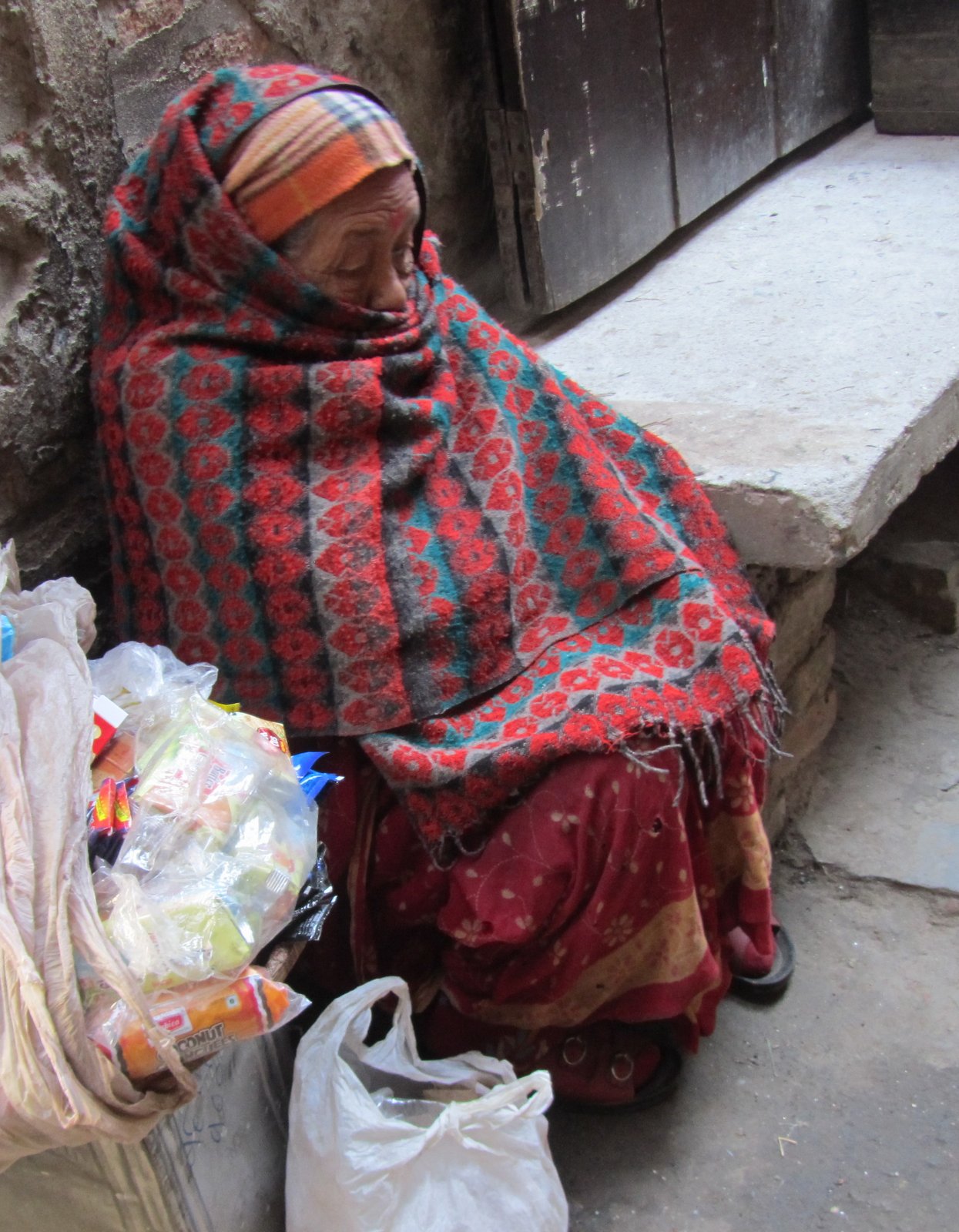
Which is why relief came in hearing daily life begin early. 4:30 in the morning early. Replacing unfamiliar sounds with the familiar. I stepped outside where the sky was still dark and the air crisp enough to see my breath in. A woman wrapped tightly in a shawl swept the streets with a broom made of twigs. Two men filled the baskets of their bikes so high with greenery and root vegetables, it was impossible for them to hop on and ride. Instead they covered the mounds with burlap, secured it tightly with twine, and walked to the street market where the produce was to be sold the moment the sun began to rise. Individuals walked quietly across town, stopping at every wall enclave housing a candle to perform a ceremonial ritual. Their destination reached at the door of a temple, where they would sound the gong of a bell advising the gods of their presence. Others congregated at the corner of a building to smoke and get an early start on the daily gossip.
The sight of it all was serene, but too chilly to be enjoyed. So the outside world was quickly abandoned, and not returned to until the streets were full of tourists.
Which is why relief came in hearing daily life begin early. 4:30 in the morning early. Replacing unfamiliar sounds with the familiar. I stepped outside where the sky was still dark and the air crisp enough to see my breath in. A woman wrapped tightly in a shawl swept the streets with a broom made of twigs. Two men filled the baskets of their bikes so high with greenery and root vegetables, it was impossible for them to hop on and ride. Instead they covered the mounds with burlap, secured it tightly with twine, and walked to the street market where the produce was to be sold the moment the sun began to rise. Individuals walked quietly across town, stopping at every wall enclave housing a candle to perform a ceremonial ritual. Their destination reached at the door of a temple, where they would sound the gong of a bell advising the gods of their presence. Others congregated at the corner of a building to smoke and get an early start on the daily gossip.
The sight of it all was serene, but too chilly to be enjoyed. So the outside world was quickly abandoned, and not returned to until the streets were full of tourists.
| Women fighting over fresh water. The limited quantities of fresh water come in long, sporadic intervals |
| temple worship |
| steaming momos - a Himalayan dumpling |
Subscribe to:
Posts (Atom)