We decided to save a bit of money in returning to Bamako, and took a bus from Mopti instead of a plane. The scheduled 8 hour bus ride turned into an 11 hour bus ride, due to stops taken and crowds of people swarming the vehicle selling lemons and meat as we drove through one village or another.
In its prime, the bus must have been extravagant with its nicely cushioned seats and working air conditioning. But its prime ended long ago, leaving us sitting on well used seats next to sealed windows with dusty drapes. The only source of air circulation came from the two emergency roof exits which were propped open a few inches.
When our names were called, allowing us on the bus, the front seats near the first emergency roof exit were all occupied - mostly by tourists. So we moved to the back, namely due to the second emergency roof exit, but also because the back was completely empty. We thought we were clever in our decision, when in fact, we couldn't be more wrong.
There was a reason the tourists piled in at the front, which stayed clean the entire trip and was never full of commotion. Unfortunately we didn't understand that reason until it was too late. Instead, we reveled in the fact that we were receiving the true African bus riding experience.
Many empty seats were soon filled after we sat down; the remaining ones were taken at a stop a few miles into our journey. There was chaos all around as people piled on the bus with large bags of goods and babies hanging off shoulders. The heat was stifling and the space was cramped, so emotions were high. But once settled it was as though a magic switch was flipped- the entire bus, babies and small children included, were absolutely silent.
Maybe it was the heat, it left everyone in a comatose state with only enough energy to sleep, not even to talk. Reading, if one is literate, was even done in spurts as the heat became overwhelming and made eyelids too heavy to bear. The only noise during the long hot hours as the bus drove through the countryside was that of a women seated next to us, whom we presume has Tuberculosis, coughing and spitting into a small bucket.
At each stop everyone was rejuvenated, and our fellow back-of-the-bus neighbors would buy the lemons or meat that were sold. The energy would stay alive for 10 to 15 minutes while the bus carried on and our neighbors ate, dropping lemon peels on the ground, or spitting undesired meat into the aisle-ways.
Absorbing everything as I sat, unable to do much else, I laughed to myself at the rawness of it all. That rawness could be a major contributor of my love of Africa. I feel a bit of heartache when I leave and a longing to return back soon, even amid or perhaps because of the poverty, filth, humility, simplicity and extreme exertion spent on every day survival.
That said, I only felt relief when leaving the bus once we finally returned to Bamako. I hopped up at the first opportunity and made my way outside to breathe in the nice, cool, exhaust filled air. Five minutes later Bremen joined me. When he explained his delay, all I could do was laugh and again comment on my love for Africa. Apparently he didn't find navigating around vomit that a little girl in front of him spewed all over the aisle way as funny as I did though.

Showing posts with label Mali. Show all posts
Showing posts with label Mali. Show all posts
Thursday, April 21, 2011

Thursday, April 14, 2011
une petite fille et sa chanson
I felt like queen of the land while in Dogon Country. Bremen carried the backpack containing our things and Moumo insisted on carrying my large water bottle, leaving me free to snap photos at will or do whatever I pleased. It was fantastic and I quickly replaced moments of guilt for sheer exuberance, realizing that chivalry is not dead, despite what I was beginning to believe in Holland.
But I digress. Because this isn't at all what I wanted to tell you about, even though it was nice to note. Instead, what I wanted to tell you was a story. A story about a girl and a song. A French song to be more specific.
It all started as we stopped at camp for our lunch break during the second day's hike in Dogon Country. The poor men, having been worn out from carrying all my belongings, found comfortable chairs to rest in and soon fell asleep. Whereas, not having had to carry a single thing besides my camera the entire journey, I was full of energy and set off exploring the area while lunch was being prepared.
After taking a few photos and making my way back towards the camp a little girl, of about 7 years old, came up to me and started singing Frere Jacques. She assumed I'm French, and since the song is probably the only French she knows, she used it as a form of communication. I, in return, joined in and sang with her. At that moment her little hand clasped onto mine and we walked towards camp together, singing a French nursery rhyme.
By the time the song ended, three other children gathered around me. We introduced ourselves.


... and me, Awa Sangare. Our names were repeated over and over. They were repeated as we walked down the path leading to the camp. They were repeated between games of "Duck, Duck, Goose!" and "Ring Around the Rosie", which I taught them. And they were repeated between Dogon songs which they sang to me.
Thirty minutes after we parted, as I was finishing up my lunch, we heard a chorus of children chanting my name: "Awa Sangare! Awa Sangare!" they chimed. Children, none of which I knew, were calling me from below, calling me from the neighboring hill, and calling me from a nearby field. When I looked over the terrace ledge they added "Ca va?" to their serenade and waved their arms around. It was such a sweet moment.
And it all began with a little girl and her song.
But I digress. Because this isn't at all what I wanted to tell you about, even though it was nice to note. Instead, what I wanted to tell you was a story. A story about a girl and a song. A French song to be more specific.
It all started as we stopped at camp for our lunch break during the second day's hike in Dogon Country. The poor men, having been worn out from carrying all my belongings, found comfortable chairs to rest in and soon fell asleep. Whereas, not having had to carry a single thing besides my camera the entire journey, I was full of energy and set off exploring the area while lunch was being prepared.
After taking a few photos and making my way back towards the camp a little girl, of about 7 years old, came up to me and started singing Frere Jacques. She assumed I'm French, and since the song is probably the only French she knows, she used it as a form of communication. I, in return, joined in and sang with her. At that moment her little hand clasped onto mine and we walked towards camp together, singing a French nursery rhyme.
By the time the song ended, three other children gathered around me. We introduced ourselves.
Apta, my singing companion:

Mata, the baby:

Ata, the middle aged girl:

Segu, the boy:

... and me, Awa Sangare. Our names were repeated over and over. They were repeated as we walked down the path leading to the camp. They were repeated between games of "Duck, Duck, Goose!" and "Ring Around the Rosie", which I taught them. And they were repeated between Dogon songs which they sang to me.
Thirty minutes after we parted, as I was finishing up my lunch, we heard a chorus of children chanting my name: "Awa Sangare! Awa Sangare!" they chimed. Children, none of which I knew, were calling me from below, calling me from the neighboring hill, and calling me from a nearby field. When I looked over the terrace ledge they added "Ca va?" to their serenade and waved their arms around. It was such a sweet moment.
And it all began with a little girl and her song.
Sunday, April 10, 2011
How's your mother, your brother, your...?
The only way to reach Dogon Country is through Mopti, a city nearly two hours away by car. The road leading to Dogon is like most African roads, paved in some areas and dirt in others. Besides the occasional pothole which can swallow a semi-truck whole, there are also animal road blocks to watch out for; (animals such as cows, donkeys, dogs - and pigs, of course). With all the potential hazards, logically one is tempted to use a seat-belt. However, doing such is not advised, as you're left with a brown stripe across your chest from the dirt covered belt. So instead, there we sat, Bremen, our guide Moumo and I, without a seat-belt in an old make-shift taxi cab, as our driver drove us to Dogon Country... at a speed of 120mph (193kph).
The Dogon Tribesmen are kind hearted, hard working, and very sociable people. It is customary to greet friends by asking them how they're doing, how their parents are doing, how their spouse is doing, how their children are doing, how their siblings are doing, how their grandparents are doing, how their goat is doing... oh and not to mention how their third cousin twice removed is doing as well. The customary response to each question is: "fine".
Along our journey, hiking to and through villages, it was easy to tell that Moumo was quite the popular guy as the end of one greeting would interfere with the beginning of another. There were also the group chants, which included three or more people seated a distance away and would offer the same greeting to Moumo at the same time.
With so many greetings being given at such rapid succession, it's easy to think I would have had plenty of opportunities to capture at least one of them on video. Sadly my stealth-like video recording abilities haven't been honed quite yet. Instead I had to request a staged greeting... because genuine or not, I wanted something to remember it by.
Monday, April 4, 2011
10 reasons why I love Africa
Reason #1: landscape diversity

Reason #2: cliff-side Pygmy dwellings

Reason #3: bucket showers - best while taken under the light of the moon

Reason #4: simple meals

Reason #5: sleeping under the stars, in an ideal climate

Reason #6: the children

Reason #7: artisan skills

Reason #8: textile colors

Reason #9: the self reliance, resourcefulness, and ingenuity of the people

Reason #10: mud huts

... and that was just Dogon Country.

Reason #2: cliff-side Pygmy dwellings

Reason #3: bucket showers - best while taken under the light of the moon

Reason #4: simple meals

Reason #5: sleeping under the stars, in an ideal climate

Reason #6: the children

Reason #7: artisan skills

Reason #8: textile colors

Reason #9: the self reliance, resourcefulness, and ingenuity of the people

Reason #10: mud huts
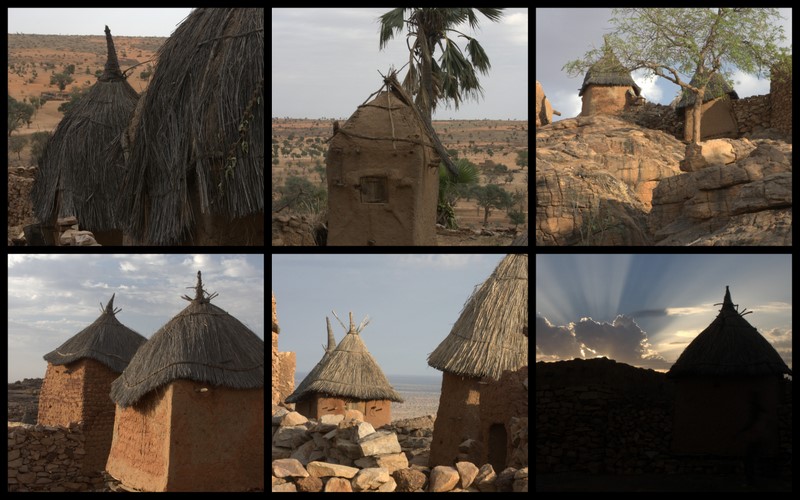
... and that was just Dogon Country.
Thursday, March 31, 2011
Arabian Nights

Monday, March 28, 2011
Three Cups of Tea, Malian edition
They say the first cup is strong like death, the second sweet like life, and the third is sugar like love. I say, all three cups are disgusting.

We met our Tuareg friend at the same time we met the Mohameds. His English was impeccable, making it hard to believe he was a nomad, but he is. Three weeks prior he had left on his journey to Timbuktu, arriving the evening before us. He was only staying for two days in order to trade his salt goods, and requested we stop by his tent to say hello. "I'll make you traditional tea," he stated. "You can ask questions about our way of life and we will show you the jewelry we make. If you like, you buy. But if not, don't worry, we'll still be friends."
The Mohameds led us to his tent after we made our way through the small market. I don't know if we would have stopped by otherwise, since Bremen mentioned his distaste for the tea, which he once had in Bamako, and neither of us had any intention of buying jewelry.
Our reception was a warm one as we crouched through the door of the tent, slipped off our shoes and sat on a rug designated for us. While the water boiled we learned that Tuareg women are the head of the households and are the ones to make all decisions, most especially where the men are to direct the caravans. We were told the caravans move at night, avoiding the heat of the day while guided by the map of stars.
 Once the tea was heated, the sugar added and thoroughly mixed, I, the sole female of the group, was offered the first cup. My tongue numbed immediately. The herb they claimed to used was obviously one I've never had before. Bremen again mumbled his distaste for the tea and forced down the last few sips.
Once everyone in the tent had tea, drunk between three shared glasses, more water was added to the pot and I was left to struggle with my inner germaphobe. The thought of having to drink another cup of tea, from a glass that had been passed around many mouths made my entire body shudder. I managed though, and sure enough, the second cup was sweeter than the first, and the third more so than the second. But I vowed to myself that it would be the first and last three cups of nomadic tea that I would drink. Unfortunately some promises are harder to keep than others.
With the final drop drunk from the final cup, velvet place-mats were laid before us, displaying a variety of jewelry. Again we were told "if you like, you buy. If you don't like, don't worry, we'll still be friends." The prices were astronomical. Even when bartering. As badly as we felt, we left empty handed. But true to his word, we were still friends.
The Tuareg nomads have a bad rap, as they're believed to be the main culprits of hijackings, kidnappings and killings... not to mention the cause of my mother's irrational fear that I'd be turned into a sex slave. But the kindness of our friend dispelled all the rumors. The Tuareg's only focus, from what I saw, was to make money. Sadly, in light of recent events, their lack of wealth and desire for a better way of life has led many down a rocky path: one filled with Gadhafi and the possibly false dream of receiving US $10,000 he promised them if they joined his team. I hate to think that my Tuareg friend might be amongst those who chose to join the ranks.

We met our Tuareg friend at the same time we met the Mohameds. His English was impeccable, making it hard to believe he was a nomad, but he is. Three weeks prior he had left on his journey to Timbuktu, arriving the evening before us. He was only staying for two days in order to trade his salt goods, and requested we stop by his tent to say hello. "I'll make you traditional tea," he stated. "You can ask questions about our way of life and we will show you the jewelry we make. If you like, you buy. But if not, don't worry, we'll still be friends."
The Mohameds led us to his tent after we made our way through the small market. I don't know if we would have stopped by otherwise, since Bremen mentioned his distaste for the tea, which he once had in Bamako, and neither of us had any intention of buying jewelry.
Our reception was a warm one as we crouched through the door of the tent, slipped off our shoes and sat on a rug designated for us. While the water boiled we learned that Tuareg women are the head of the households and are the ones to make all decisions, most especially where the men are to direct the caravans. We were told the caravans move at night, avoiding the heat of the day while guided by the map of stars.

Once everyone in the tent had tea, drunk between three shared glasses, more water was added to the pot and I was left to struggle with my inner germaphobe. The thought of having to drink another cup of tea, from a glass that had been passed around many mouths made my entire body shudder. I managed though, and sure enough, the second cup was sweeter than the first, and the third more so than the second. But I vowed to myself that it would be the first and last three cups of nomadic tea that I would drink. Unfortunately some promises are harder to keep than others.
With the final drop drunk from the final cup, velvet place-mats were laid before us, displaying a variety of jewelry. Again we were told "if you like, you buy. If you don't like, don't worry, we'll still be friends." The prices were astronomical. Even when bartering. As badly as we felt, we left empty handed. But true to his word, we were still friends.
The Tuareg nomads have a bad rap, as they're believed to be the main culprits of hijackings, kidnappings and killings... not to mention the cause of my mother's irrational fear that I'd be turned into a sex slave. But the kindness of our friend dispelled all the rumors. The Tuareg's only focus, from what I saw, was to make money. Sadly, in light of recent events, their lack of wealth and desire for a better way of life has led many down a rocky path: one filled with Gadhafi and the possibly false dream of receiving US $10,000 he promised them if they joined his team. I hate to think that my Tuareg friend might be amongst those who chose to join the ranks.
Thursday, March 24, 2011
Tour in snapshots
Mohamed, Mohamed and Mohamed's masterful skills of guiding us through the city and providing such extensive historical background (thanks to English speaking Mohamed), made the hours fly by.
First snapshot:
They led us through the small market, a location that brought an Indiana Jones movie to life. We walked down a cramped aisle way, where on either side of us sat women surrounded by fruits, vegetables and shea butter; the sun streaming through the holes of canvas linens patched together to form a make-shift roof.

Second snapshot:
We followed them down the streets, past the local schools and cemetery located in the distance, to see the two other mud mosques located in the city. Fun fact: the wood poking out of the walls are not actually for aesthetic appeal; they're more of a built in scaffolding, since the mud structure needs regular maintenance.

Third snapshot:
Walking down one road, they explained the love of cat among children... the love of eating cat that is. Many cat carcasses are hung to dry after the meat is eaten. Yum?

Fourth snapshot:
We visited the homes of Gordan Laing and Rene Caille. A few minutes later, English speaking Mohamed explained that in the time of those explorers, women were not allowed in the streets and instead spent their lives inside their homes, with their only contact of the outside world being through the upstairs windows.

Final snapshot:
To end our time together, since we had more activities on our plate, the Mohameds took us to the large market. Upon seeing it we agreed with them that bigger is not necessarily better since we enjoyed the small market far more.

Sunday, March 20, 2011
The Mohameds

I hate being the bearer of bad news, but I hate liars even more. So, I'll just come out and say it: there's not a single street in all of Timbuktu that is paved in gold. It's true. I searched. Instead there are streets made of limestone, dirt, sand (my favorite) and then, at times, trash.
But really, who needs gold paved roads when you'd probably be imprisoned for trying to steal pieces of it anyway?

Bremen and I arrived with a haze of euphoria, incredulous that we were actually in a legendary place.
Being the only two who were not a part of the German's elite group, we appeared oddly out of place once we exited the plane. We may have stood out due to the backpacks we wore... otherwise it was our wide eyes and giddy expressions. But it took less than a second for Chicago, a guide who adopted that name since his is too hard for tourists to pronounce, to spot us. He won us over and whisked us into a taxi, depositing us in front of the nicest hotel in all the land.
Once we were done gawking at the beauty of the hotel, having already left our things in our room, we set off to explore the city. We hadn't been out more than five minutes when we were accompanied by a local French speaking boy who started explaining the history of the library we were in front of.

Unbeknown to Bremen and I, they all decided to be our guides. Besides, they informed us, since it was Muhammad's birthday and there was no school, they had nothing better to do and found no greater enjoyment than show two strangers their hometown (along with practicing their English). We both thought we saw dollar signs in their eyes, but they held true to their words.
Initially I was a bit wary of their enthusiasm, and wondered if the winding streets they were guiding us through would actually take us to the destination they said it would. But after a few minutes it came clear that they were the best companions we could have ever asked to tag along uninvited.

French speaking Mohamed, English speaking Mohamed, and little brother Mohamed
Wednesday, March 16, 2011
to Timbuktu and back
The illustrious city of Timbuktu, founded by Taureg nomads in the 1100's, is located at the edge of the Sahara desert and a few miles away from the Niger river, making it a prime location for trading. In the years following, the city flourished as salt trading, its main revenue, carried its weight in gold. Through the city's wealth it also became a city of learning, with numerous universities and Qur'anic schools, thus acquiring national acclaim.
That acclaim turned worldwide in the mid 1300's when the ruler of Mali carried so much gold with him (180 tons worth) on his way to Mecca, that when he stopped in Egypt the Egyptian currency lost its value and put both Mali and Timbuktu on the map.
Centuries later, legends of Timbuktu drove European explorers to seek out the fabled city. The first recognized explorer to reach the city was British Captain, Alexander Gordon Laing, but was killed upon leaving. Since then it became more than just a quest to find the city of gold, but to return home alive. Rene Caillie, a French explorer, was the first person to accomplish the feat through cunning maneuvers. And now my name has also been added to the success list, as I too can say I have been to Timbuktu and back.

Thursday, March 10, 2011
For here am I sitting in a tin can, far above the world
On the many flights I have been on in the last 30 years, I have only been nervous twice.
The first time was on a flight from Zanzibar to Nairobi when the pilot exclaimed over the loud speaker, "Have a safe flight!"
The second time was on my flight to Timbuktu. After we reached a safe altitude, the co-pilot became our steward as he pushed a trolley down the aisle and handed out croissants and juice. Half way through his duties, the captain also left the cock pit to use the bathroom... located at the back of the plane. Longest three minutes of my life.
Now, I know planes run on auto pilot, but there's a security in knowing someone is keeping watch-- just in case, right?
Monday, March 7, 2011
Dispelling the myth
Timbuktu. The local your mother threatened to ship you off to unless you stopped acting up. A city paved in gold. The point of no return. And to some people, a purely fictional place.
Being in Mali, country of previously stated "mythical location", I felt it my duty to find out if any of the above statements were accurate. Well, all except the one about your mother threatening to ship you off, because we all know that's true.
To be quite honest, my desire to visit Timbuktu was the catalyst behind showing up in Mali at all. I just didn't know if that desire was going to be fulfilled, since the city is quite literally in the middle of nowhere- not to mention advisories warning not to go (advisories including threats of Al Qaeda in the region). My parents have often stated I have selective hearing... and this time was no exception. So Bremen and I decided we should at least try to give it a go.
Tuesday morning we were at the airport at 6am. The one flight of the day left an hour later. We got in line (there are two, one for each airline) and were immediately told by two Germans, who were predatorily guarding the line, that we'd have to try the other airline. They stated they chartered the entire plane to Timbuktu - all 30 seats, and there was no way we were getting on. So we went to the other airline only to find out they didn't fly to Timbuktu that day. When we stepped back to the end of the line of the initial airline, the Germans again made it a point to tell us we weren't getting on.
In vain efforts to discourage us, they explained that because it was a holiday (Muhammed's birthday) the flight was full. Instead of giving up, we told them we'd check with the airline representative. In turn they preached that it was futile to try to get on a flight the next day or the day after because those flights would be full as well. After each attempt of discouragement, we again repeated our resolve to check with the airline; with our smiles growing bigger and their disgust showing more evident on their faces. Nearly exasperated, they tried one last attempt by spewing out it was pointless thinking that if, by some miracle, we did get a flight up, we'd be lucky enough to get a flight back, because certainly they'd all be full too.
Smiling, we went to the front of the line where the representative asked us wait off to the side. So we waited. And waited. And continued waiting for 40 minutes. Fifteen minutes before the flight was to take off the Germans came up to us, with a changed demeanor, informing us we may be in luck. Five minutes later the airline representative explained that two people from the Germans' party never showed up. Meaning, there were two free spots on the fully chartered plane. Two! Just for us! It was perfect.
With ten minutes remaining we rushed through all the details of purchasing and paying for the flight, filling out documents, hurrying past customs and a security check in order to arrive at the gate before it was too late.
But we made it, right on time to join the Germans and local government officials on a flight to Timbuktu. We even managed to maintain smug looks on our faces as we passed by each one.
Thursday, March 3, 2011
Photographs made of words
It is hard for me to think of a place I've desired so much to photograph, but felt unable to. Photographing people and certain buildings in Mali is taboo - and with hundreds of eyes watching the white girl, it leaves little opportunity to sneak in shots.
Bamako is a vibrant city: the people, the mud/concrete homes, the red dirt that sticks to your shoes, feet, legs, and everywhere else on your body. Women dress in colorful gowns with bold prints and head wraps. Motorbikes zoom in and out of traffic, with most motor boys wearing an airline provided eye mask around their nose and mouth to protect them from the smog, instead of a helmet to protect them if they fall.
Walking around the city on a Monday provides a stark contrast to the quiet weekend. The streets are filled with movement. People (mainly men) congregate at their food, sim card, or tire stands made of plywood. Women sit outside washing clothes in buckets, lining the clean linens on the local football field -turned stadium's fence. One woman multi-tasks by washing her naked baby's feet in one bucket while another continues washing clothes in a second. Most women walk around with baskets on their heads full of items; men with items hanging from their necks. Boys huddle around Foosball tables covered by the shade of a tree or a makeshift roof.
My less than rudimentary French was my crutch. All conversations lasting around 3 seconds - enough time to say a basic greeting of hello and how are you. I was waved over a few times by men who would take my hand and start up a conversation in French. I'd smile, trying to find a perfect moment to ask if they speak English and explain I'm American. They'd take to the news as warmly as they had started the conversation. They'd try hard to communicate in the 5 English words they knew, and then would revert back to French, leaving me clueless as to what they were saying. I could only guess what the conversation was about.
One gentleman called me over from the street to the wall he was leaning against. His smile showed his rotting teeth, two of which were missing from the front of his mouth. He took my hand, asked my name, told me his, then asked where I was sleeping by pressing his hands together and placing them by his ear as he tilted his head. I pointed to myself, repeated the same gesture he had, then added the words 'mon ami' while pointed in the direction of Bremen's house. He understood, although (from what I gathered) he still informed me that if I need a place to sleep, I was welcome at his house and he proceeded to pointed out where it was. I thanked him and continued on my way.
Ten minutes later I was approached by a boy in his mid 20's. He spoke no English, but also asked if I had a place to stay. I again tried explaining I was visiting a friend. He offered me his number, just in case, and led me to his house, since I was in no hurry to get anywhere. Along the way people would say hello and ask how I'm doing. All very friendly and polite. When we reached Mohammed's house, he led me into the courtyard where 2 women, 3 men and a few children were gathered. They each greeted me warmly, one (who was ripping up meat in a bowl) even offering me her chair. I graciously declined. I shook hands with each person then said goodbye. They thanked me for coming.
Having arrived from a country where people are closed and look inward instead of out, I tried wrapping my head around their hospitality and generosity. Maybe it has to do with the warm climate, leaving people with warm hearts. Or maybe their poverty has left them with a greater sense of humility and charity. Unfortunately I wasn't around long enough to figure it out - if there is a reason at all. I'm just grateful to have experienced it.

Bamako residental street
Sunday, February 27, 2011
Malian tradition

Overlooking Dogon Country, Mali
Bremen, the friend I visited, and I had stopped at a fruit stand near his home the afternoon of my first day in Bamako. One of the locals at the stand asked my name. After introducing myself, she looked at me, smiled and then told me my new first name.
Later in the evening, on the way to a dinner party, we entered a taxi which was already occupied with 3 other women (besides the taxi-man, which is what all drivers are called). We crammed our way in and made small talk. One of the women asked the taxi man his name and discovered their last names were the same. They began laughing, then asked us what our names are. Once Bremen stated I had no last name, they offered me theirs. I smiled and accepted the offer.
It was as simple as that, and was the only name I used during my stay.
So you too can decide whether you'd like to call me by my birth name or my new Bambara name, Awa Sangare. Because I now answer to both.
Wednesday, February 23, 2011
You're going where?
- I'm going to Mali!
- Oh nice, I love Maui.
- No, no... not Maui, Mali.
- I leave on Friday for Mali... can't wait.
- Wow, world traveler! How long are you staying?
- Just one week.
- You're going all the way to Bali just for one week?
- Oh, no, not Bali... Mali - West Africa.
- You're going to Mali? You're not scared?
- Not one bit! I'm counting down the days.
- Claire! Haven't you seen Sahara??
- No, why? Should I?
- Well, probably not now. But I think you're crazy for going. Just be careful...
- I really don't know how I feel about your going to Mali, Claire.
- Mom, I'm going to be fine.
- Well, what about all the advisories warning people not to go? I tell you what, I'll reimburse you half the price of your flight if you promise not to go.
- Thanks but no thanks, I'm not passing this up.
- But what if you're abducted and turned into a sex slave??
- Haha... one could only hope.

Small Market in Timbuktu, Mali
Sunday, February 20, 2011
Subscribe to:
Posts (Atom)